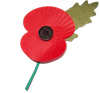
The Wharf has remembrance poppies for sale at the bar in the run-up to Remembrance Sunday and Armistice Day on 11 November. Pick one up next time you’re in – all the money goes to the Royal British Legion’s Poppy Appeal.
In Flanders Fields
During the First World War, poppies bloomed across the battlefields of the Western Front. In May 1915, after seeing them flowering among the graves, Lieutenant Colonel John McCrae wrote the poem In Flanders Fields. It was first published in Punch in December 1915 and quickly became one of the most popular poems of its age.
In Flanders fields the poppies blow
John McCrae, 1915
Between the crosses, row on row,
How the poppy became a symbol
Moved by McCrae’s poem, the American academic Moina Michael wrote a reply – “And now the Torch and Poppy Red, we wear in honor of our dead…” – and campaigned for the poppy to be adopted as a symbol of remembrance. At the same time in France, Anna Guérin was promoting the poppy too, and in 1921 she visited the newly founded British Legion with poppies made by French women to raise money for children in the devastated regions of France.
The Legion ordered a million poppies, then another eight million when Earl Haig made 11 November “Poppy Day”. That first Poppy Appeal raised over £100,000 – a huge sum at the time – to help veterans with housing and jobs. In 1922 the Legion founded the Poppy Factory, staffed by ex-servicemen with disabilities, and the Lady Haig Poppy Factory in Scotland followed in 1926.
What the poppy stands for
- Remembering the sacrifices of those who have served their nation
- Support for today’s Armed Forces community
- Hope for a peaceful future